Teamwork in Data Analysis Business: Unlocking Collective Intelligence
In the modern digital landscape, data is often described as the new oil. However, raw data without refinement offers little value. The true power lies in the analysis, interpretation, and strategic application of that information. This is where Teamwork in Data Analysis Business becomes not just a beneficial practice, but a critical necessity. As datasets grow in volume and complexity, the idea of a lone analyst working in isolation to derive actionable insights is becoming obsolete. Instead, successful organizations are turning to collaborative frameworks where diverse skill sets converge to solve complex problems.
The concept of collaboration extends beyond simple communication; it involves a structured synergy between statisticians, business strategists, software engineers, and domain experts. When these groups work together, they transform abstract numbers into concrete business strategies. This article explores the mechanics, benefits, and practical applications of fostering a culture of teamwork within data analysis environments, providing a roadmap for professionals and business owners looking to elevate their analytical capabilities.
The Evolution from Silos to Synergy
Historically, data analysis was often conducted in silos. A specific department would gather its own data, analyze it using proprietary tools, and present findings that were sometimes difficult for other parts of the organization to understand or utilize. This fragmentation led to inconsistent metrics, duplicated efforts, and missed opportunities. The shift toward Teamwork in Data Analysis Business represents a fundamental change in organizational structure and mindset.
In a collaborative environment, data flows freely across departments. Marketing teams share customer behavior data with product development, while finance teams provide budget constraints that help data scientists prioritize high-impact projects. This cross-pollination ensures that the analysis is grounded in reality and aligned with broader business goals. The result is a more holistic view of the organization's performance, allowing for decisions that are both data-driven and contextually aware.
Why Collaboration Drives Better Insights
The primary advantage of teamwork in this field is the diversity of perspective. A pure mathematician might see a pattern in an algorithm, but a sales manager can explain why that pattern exists based on recent market shifts. Conversely, a data engineer might identify a technical limitation that prevents a certain type of analysis, saving the team weeks of futile effort. By combining these viewpoints, teams can:
- Reduce Bias: Multiple reviewers can challenge assumptions and identify cognitive biases that a single individual might overlook.
- Enhance Accuracy: Peer review processes inherent in teamwork catch errors early, ensuring higher data integrity.
- Accelerate Innovation: Brainstorming sessions among diverse teams often lead to novel approaches to old problems.
- Improve Communication: Translating technical findings into business language becomes easier when non-technical stakeholders are involved from the start.
Practical Applications Across Industries
The principles of Teamwork in Data Analysis Business are applicable across a wide spectrum of industries. From healthcare to retail, the ability to collaborate on data determines competitive advantage. Consider the following real-world scenarios where this approach has proven vital.
Retail and E-Commerce Optimization
In the fast-paced world of e-commerce, understanding consumer behavior is paramount. A data team might analyze clickstream data to identify drop-off points in the checkout process. However, without input from the UX design team and the marketing department, the solution might be technically sound but user-unfriendly. Through teamwork, the data analysts pinpoint the issue, the designers propose interface changes, and the marketers test promotional adjustments simultaneously. This coordinated effort leads to a seamless customer experience and increased conversion rates.
Healthcare and Patient Outcomes
In healthcare, data analysis can literally save lives. Medical researchers, IT specialists, and hospital administrators must work together to interpret patient data. For instance, predicting patient readmission rates requires clinical knowledge to understand risk factors, statistical expertise to build predictive models, and administrative insight to implement care protocols. Teamwork in Data Analysis Business ensures that these models are not only accurate but also ethically sound and practically implementable within the hospital's workflow.
Visualizing Success: The Role of Design Assets
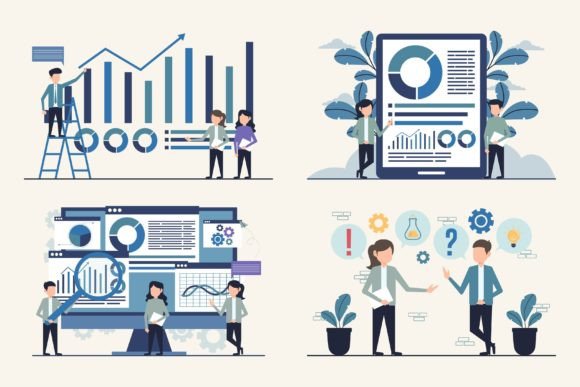
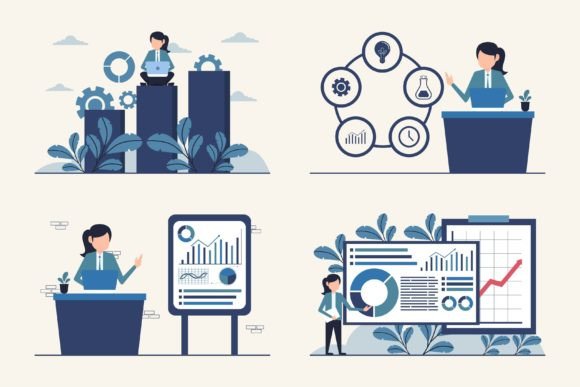
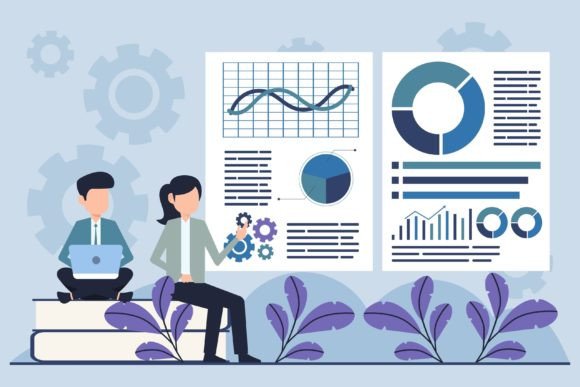
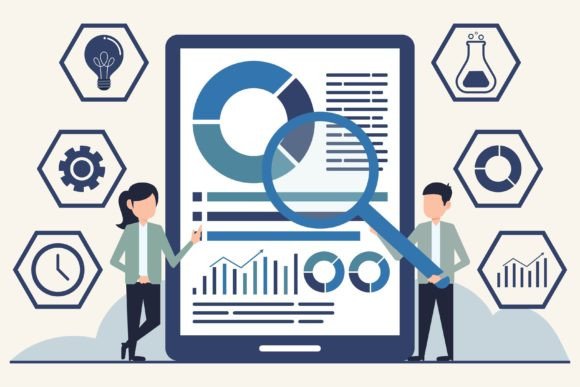
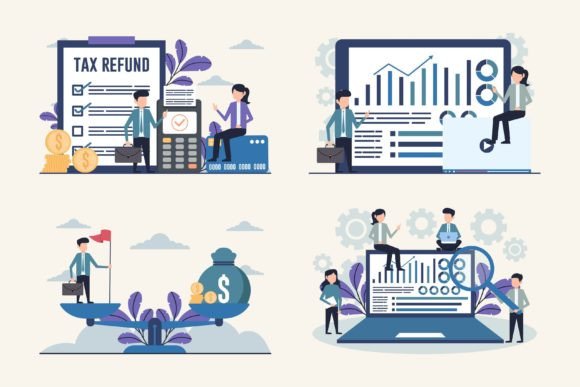
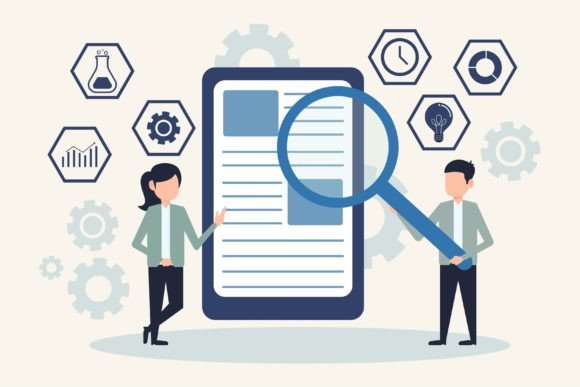
Effective teamwork is not just about the analysis; it is also about how the results are communicated. Stakeholders need clear, compelling visuals to understand complex data trends. This is where high-quality design assets play a crucial role. Modern data teams often rely on vector graphics to create infographics, dashboards, and presentation materials that are scalable and professional.
When selecting visual resources for your data projects, quality matters. Imagine having access to a comprehensive library where every element is 100% vector-based. This means you can easily edit vector files in any vector graphics software without losing quality. You can transform, scale up or down, add or remove elements, change text, and recolor components to match your brand identity perfectly. Whether you are creating a web graphic, a mobile web layout, a landing page, a banner, a hero image, or detailed infographics, these versatile assets suit your design needs effortlessly.
For businesses investing in data visualization, having a robust toolkit is essential. Many professional packages now include 100 vector source files in EPS formats, along with high-resolution JPGs. This flexibility allows data storytellers to adapt their visuals for various platforms instantly. A chart designed for a large conference screen can be resized for a mobile app notification without pixelation, ensuring consistency in messaging across all touchpoints.
Challenges and Considerations
While the benefits of collaboration are clear, implementing Teamwork in Data Analysis Business is not without challenges. One common hurdle is the "language barrier" between technical and non-technical staff. Data scientists often speak in terms of p-values and algorithms, while business leaders think in terms of ROI and market share. Bridging this gap requires patience, training, and the establishment of a shared vocabulary.
Another consideration is the management of tools and workflows. Different team members may prefer different software, leading to compatibility issues. It is crucial to standardize on a set of collaborative tools that support version control, real-time editing, and secure data sharing. Additionally, data privacy and security become more complex when multiple people have access to sensitive information. Clear protocols and governance frameworks must be established to protect intellectual property and customer data.
Evaluating Suitability for Your Organization
Not every project requires a massive collaborative effort. Small, routine analyses might be handled efficiently by a single expert. However, for strategic initiatives that impact the core direction of the business, a team approach is superior. When evaluating whether to adopt a collaborative model, consider the following questions:
- Complexity: Does the problem require knowledge from multiple disciplines?
- Impact: Will the outcome significantly affect revenue, operations, or customer satisfaction?
- Stakeholder Buy-in: Do key decision-makers need to be involved in the process to trust the results?
- Resource Availability: Does the organization have the personnel and tools to support effective collaboration?
If the answer to these questions leans towards yes, then investing in Teamwork in Data Analysis Business is likely a strategic move that will yield long-term dividends.
Building a Culture of Collaborative Analytics
Fostering a culture where teamwork thrives requires intentional leadership. It starts with breaking down physical and digital barriers. Open office spaces, shared digital workspaces, and regular cross-departmental meetings can encourage spontaneous interactions and idea exchange. Leaders should reward collaboration over individual heroics, recognizing that the best insights often come from the intersection of ideas.
Furthermore, continuous learning is essential. As technology evolves, so too must the skills of the team. Encouraging team members to learn about each other's roles—such as a data analyst taking a course on basic marketing principles—can deepen mutual respect and improve communication. When everyone understands the challenges and contributions of their colleagues, the friction decreases, and the flow of innovation increases.
Conclusion
The future of business intelligence lies in our ability to work together. Teamwork in Data Analysis Business transforms raw data into a strategic asset that drives growth, efficiency, and innovation. By embracing collaboration, organizations can overcome the limitations of individual expertise and unlock the full potential of their data. Whether you are a startup looking to gain a foothold or an enterprise seeking to optimize operations, the path forward is paved with collective intelligence. With the right mindset, tools, and visual assets, your team can turn data into a story that inspires action and delivers measurable results.