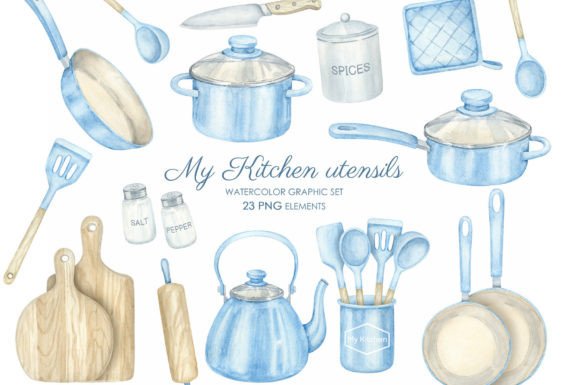
Watercolor Kitchen Utensils Clipart: A Practical Guide to Quality and Usage
There is a distinct charm in the soft, fluid edges of watercolor art that digital vector graphics often struggle to replicate. When you introduce Watercolor Kitchen Utensils Clipart into your design projects, you are adding texture, warmth, and a human touch that resonates with audiences looking for authenticity. Whether you are designing a recipe blog, creating packaging for artisanal food products, or crafting invitations for a culinary event, these illustrations can elevate the visual narrative. However, not all clipart sets are created equal, and choosing the wrong assets can undermine the professional quality of your work.
The difference between a polished final product and a disjointed one often comes down to the technical specifications of the images you download. Many creators overlook the importance of resolution and file format until they are too late, resulting in pixelated logos or blurry print materials. This guide will walk you through what to look for, common pitfalls to avoid, and how to maximize the potential of high-quality watercolor assets like the set featuring 23 hand-painted PNG elements.
Understanding the Value of High-Resolution Assets
When browsing for digital art, it is easy to get distracted by the aesthetic appeal of an image without considering its technical foundation. The primary reason people seek out Watercolor Kitchen Utensils Clipart is to achieve a specific artistic style without spending hours painting each item from scratch. These assets typically include items like wooden spoons, whisks, rolling pins, and measuring cups, rendered in a painterly style.
The true value lies in the versatility provided by high-resolution files. A standard set should offer images at 300 DPI (dots per inch). This specification is non-negotiable for any project intended for physical printing. If you attempt to use a low-resolution image—often found on free stock sites—for a poster, sticker, or textile print, the result will be jagged and unprofessional. The fine details of the watercolor washes will blur, and the transparency around the edges may appear muddy. By selecting a collection with 300 DPI resolution, you ensure that your designs remain crisp whether they are viewed on a mobile screen or printed on a large banner.
Common Mistakes When Selecting Clipart
One of the most frequent errors designers make is assuming that all "transparent background" images are suitable for every application. While a transparent background is essential for layering elements over photos or colored backgrounds, the quality of that transparency varies significantly. Poorly processed images often leave behind white halos or jagged anti-aliasing pixels around the subject. This creates a visual barrier that makes the illustration look pasted on rather than integrated.
Another misunderstanding involves color modes. Many users download images in CMYK color mode, thinking it is better for printing, only to find the colors look dull on their website or social media channels. For digital applications, including web design, social networking promotions, and marketing emails, you need images in RGB color mode. RGB provides a vibrant spectrum that matches the capabilities of screens. Using CMYK images digitally can result in washed-out hues that fail to capture the lively spirit of watercolor art.
Furthermore, there is a tendency to treat clipart as a "one-size-fits-all" solution. Some users stretch or resize images beyond their native dimensions to fit a layout. Even with high-quality 300 DPI files, excessive scaling can degrade the image. It is crucial to understand the scale of the original illustration before placing it in your design. A whisk that looks perfect as a small icon might lose its delicate brushstroke details if blown up to cover an entire page background.
How Technical Flaws Impact Your Projects
The consequences of using subpar clipart extend beyond simple aesthetics; they affect the credibility of your brand and the efficiency of your workflow. Imagine spending days designing a logo for a new kitchenware brand, only to realize the central watercolor utensil element is pixelated when printed on business cards. This forces a costly redesign and delays your launch timeline.
In the context of the textile industry or scrapbooking paper, low-resolution images can cause banding or moiré patterns when printed on fabric or heavy cardstock. This ruins the tactile experience of the final product. Similarly, for event projects like wedding invitations or party favors, a blurry image can make the occasion feel less special. Clients and customers judge the quality of your service based on the smallest details. A high-quality, hand-painted element signals care and attention to detail, whereas a pixelated asset suggests haste and negligence.
Practical Advice for Choosing the Right Set
To avoid these issues, you must evaluate the product description carefully before purchasing or downloading. Look for explicit mentions of PNG format with a transparent background. Ensure the seller states the resolution is 300 DPI. This guarantees that the file is ready for both high-end print and digital use without requiring complex conversion processes.
Consider the scope of the collection. A robust set, such as one containing 23 graphic elements, offers enough variety to create cohesive designs without needing to source additional assets. Having a consistent style across multiple utensils—such as spatulas, ladles, and knives—allows you to build a unified visual language for your project. This consistency is vital for branding, ensuring that your logo, social media posts, and packaging all speak the same visual dialect.
Always check the license terms. While many clipart sets are available for personal use, commercial usage requires specific permissions. If you plan to use the images for marketing, promotions, or selling physical goods like stickers and posters, verify that the license covers these activities. Using assets without the proper rights can lead to legal complications and financial penalties.
Optimizing Your Workflow with Watercolor Illustrations
Once you have secured a high-quality set, integrate them thoughtfully into your workflow. Because these are hand-painted illustrations, they often feature unique textures and color variations. Use these characteristics to your advantage. For example, layering a semi-transparent utensil over a textured paper background can create depth and dimension in a web design project.
For marketers and entrepreneurs, these images are excellent for creating engaging social media content. A high-resolution PNG allows you to place a watercolor whisk over a photo of a real kitchen counter, blending the digital and physical worlds seamlessly. This technique is particularly effective for promoting cooking classes, recipe blogs, or home decor brands.
Remember that while these assets save time, they still require thoughtful composition. Do not simply drop an image onto a canvas and call it a day. Adjust the opacity, blend modes, and positioning to ensure the watercolor style complements the rest of your design elements. By treating these clipart pieces as integral parts of your creative process rather than quick fixes, you can produce work that feels bespoke and professionally crafted.
Final Considerations Before You Download
Before finalizing your decision on a Watercolor Kitchen Utensils Clipart set, take a moment to review the preview images closely. Zoom in to inspect the edges of the illustrations for clean transparency and check the color vibrancy. Confirm that the file format is indeed PNG and that the resolution meets your specific needs. If the listing promises 23 elements, ensure they are diverse enough to support your project's requirements.
Investing in quality digital assets is an investment in your brand's reputation. By avoiding the common traps of low resolution, incorrect color modes, and poor licensing, you ensure that your designs communicate professionalism and creativity. Whether you are a freelancer building a portfolio or a small business owner launching a product line, the right tools make all the difference. Choose wisely, and let the artistry of watercolor enhance your vision.